That empty-pocket moment
You check one pocket. Then every pocket.
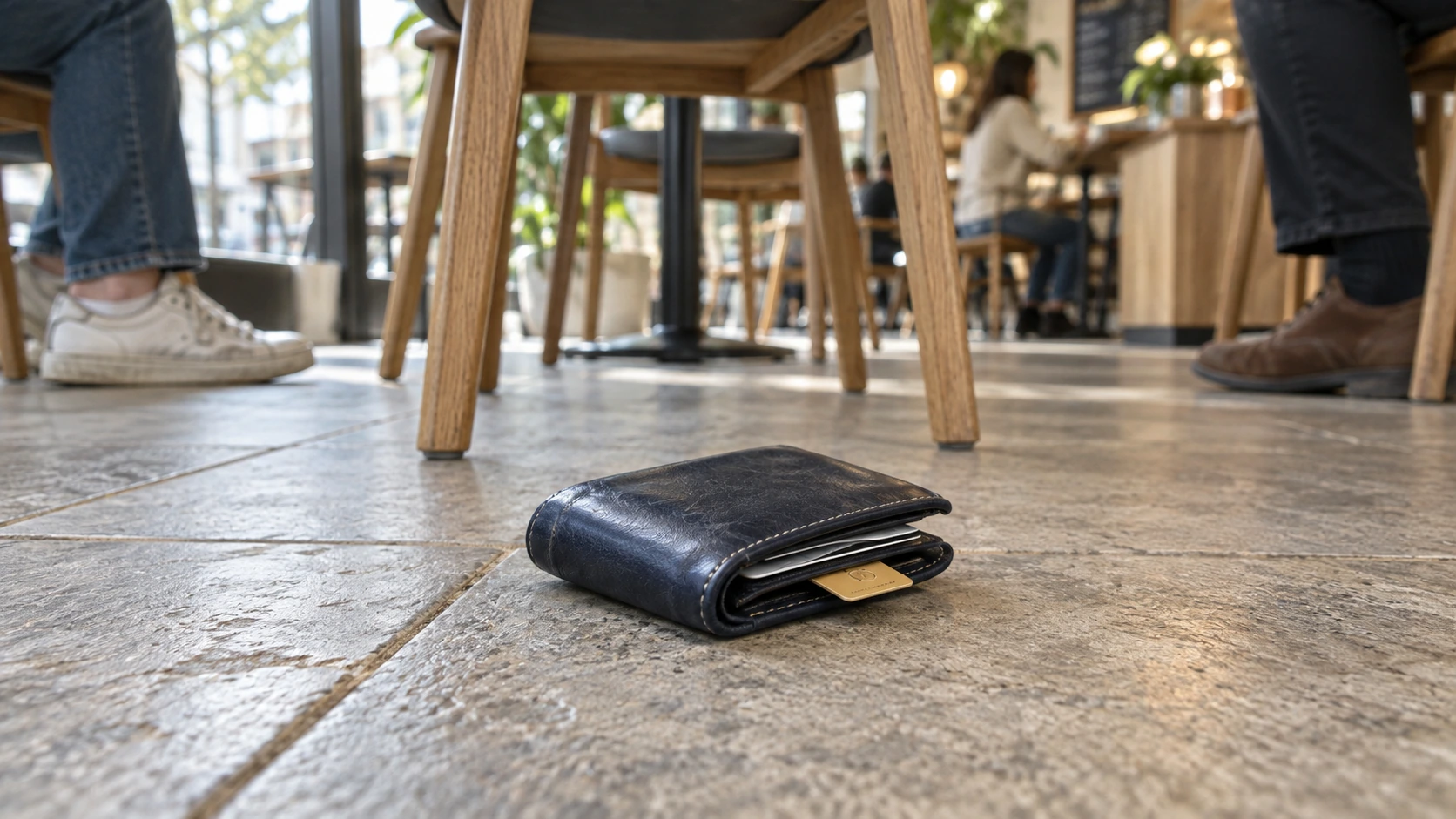
It’s twenty to midnight and you’re on your own doorstep, patting the same four pockets again and again. Phone. Keys. No wallet.
Two bank cards. Your ID. The cash you took out that morning. And you can’t say whether it’s in the back of a taxi, on the café table where you paid, or between the sofa cushions a few steps away. That’s the part that stings: you have no idea where to start.
The cash is the least of it. What comes next arrives in a familiar order, and every step lands on a day you had other plans for.
Frozen, then reissued. Days without them while the replacements arrive.
Gone. Nobody sends that back.
An appointment, a form, a new photo, and weeks of waiting for the replacement.
If they went with it, sometimes a new lock as well.
Phone calls, waiting rooms, paperwork, and an afternoon spent retracing your steps.
Your name, your address and your ID are out there somewhere, and you have no way of knowing where.
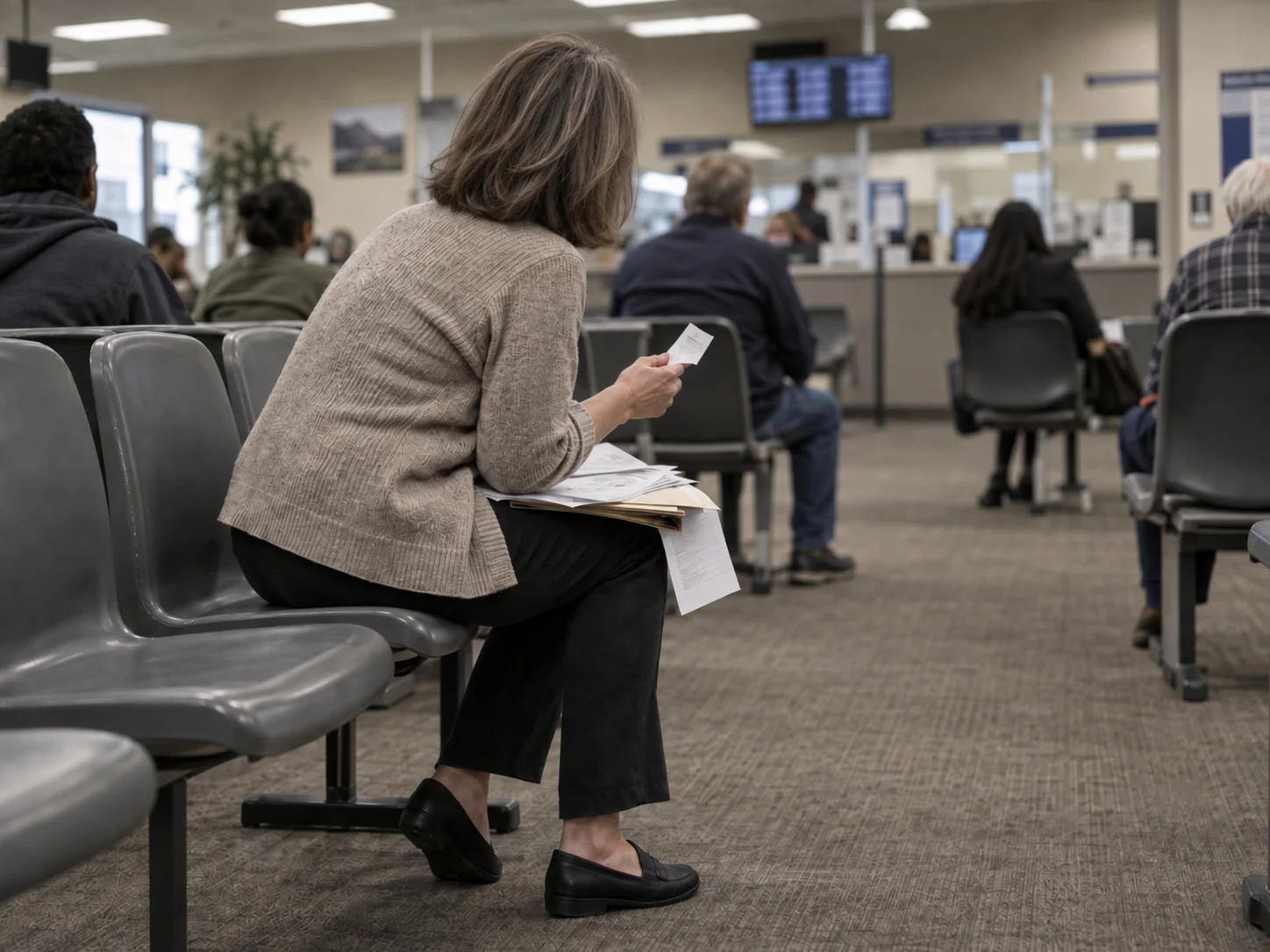
Here’s what almost nobody thinks about until it happens: the real trouble isn’t the moment the wallet leaves your pocket. It’s the gap before you notice. Notice within two minutes and it’s still on the café table where you paid. Notice at midnight and it could be anywhere you went that day. Everything after that is cleanup.
Away from home, the gap gets wider. A wallet or passport pouch left at a check-in desk in a city you don’t know can cost you a whole day of the trip, and you might not notice until you’re across town.
What if your wallet could tell you where to look?
A familiar shape. A different job.
This card doesn’t pay for anything. It helps you find what does.
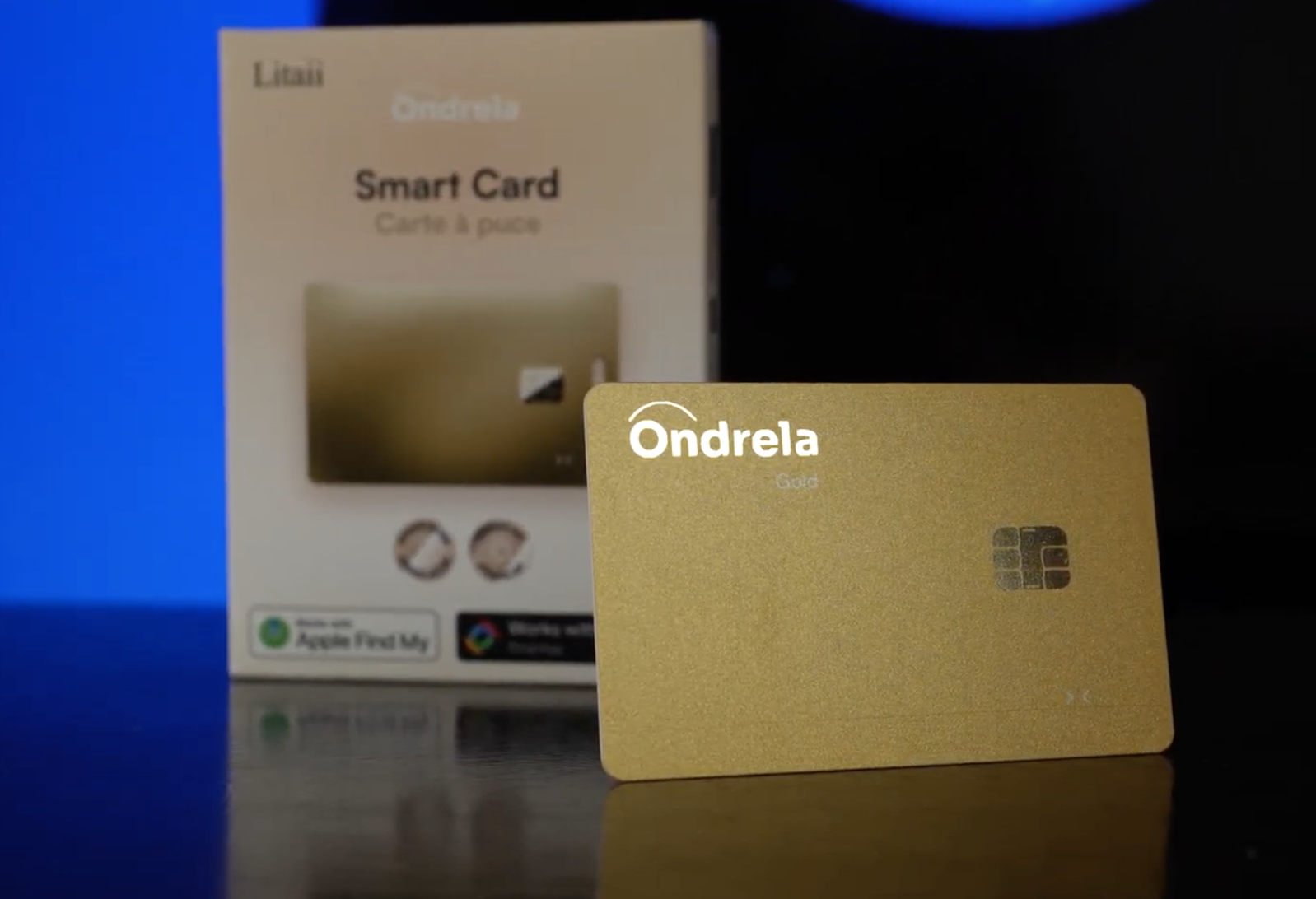
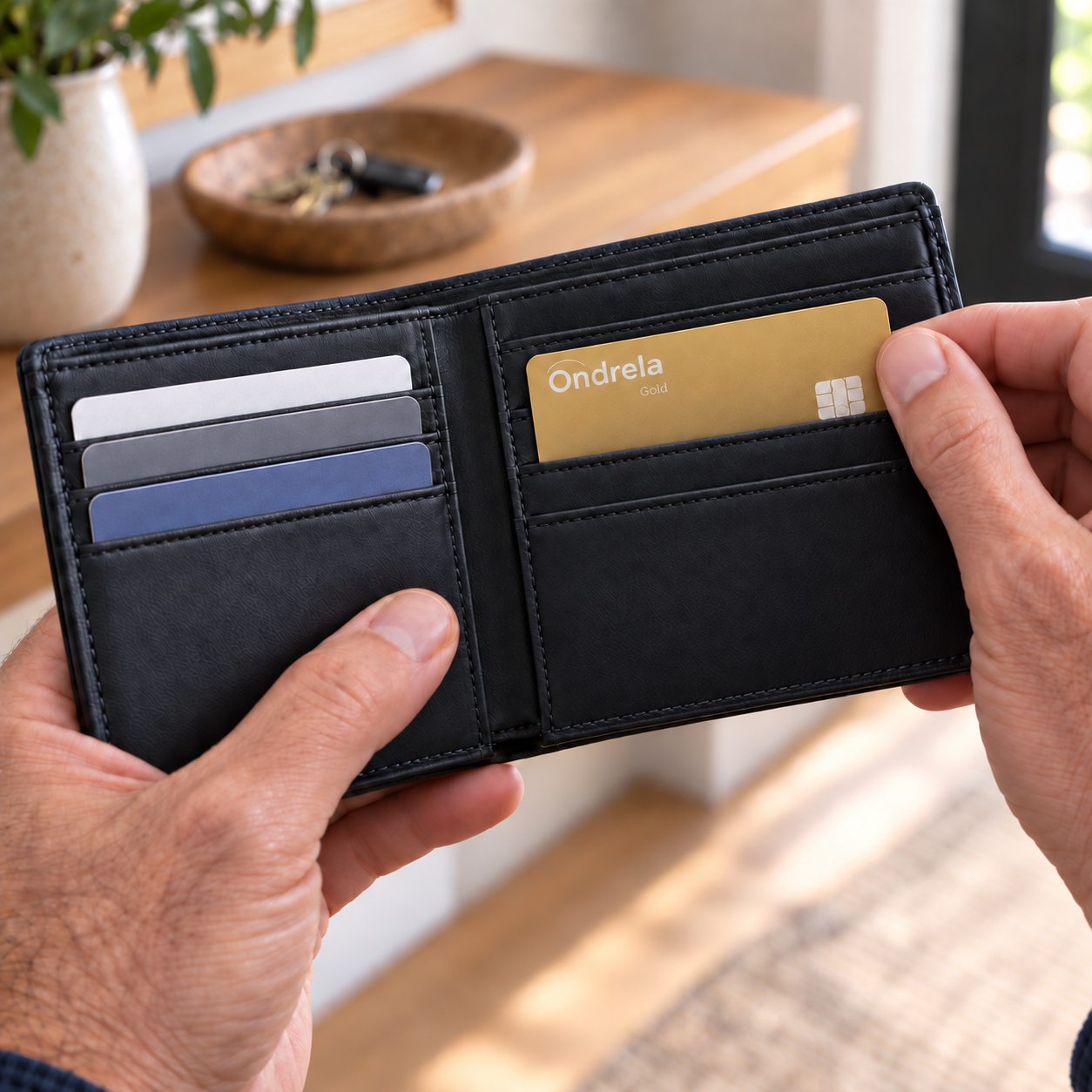
Ondrela is a tracker shaped like a bank card. Slide it into a card slot in the wallet you already carry, pair it with your phone once, and the setup is done.
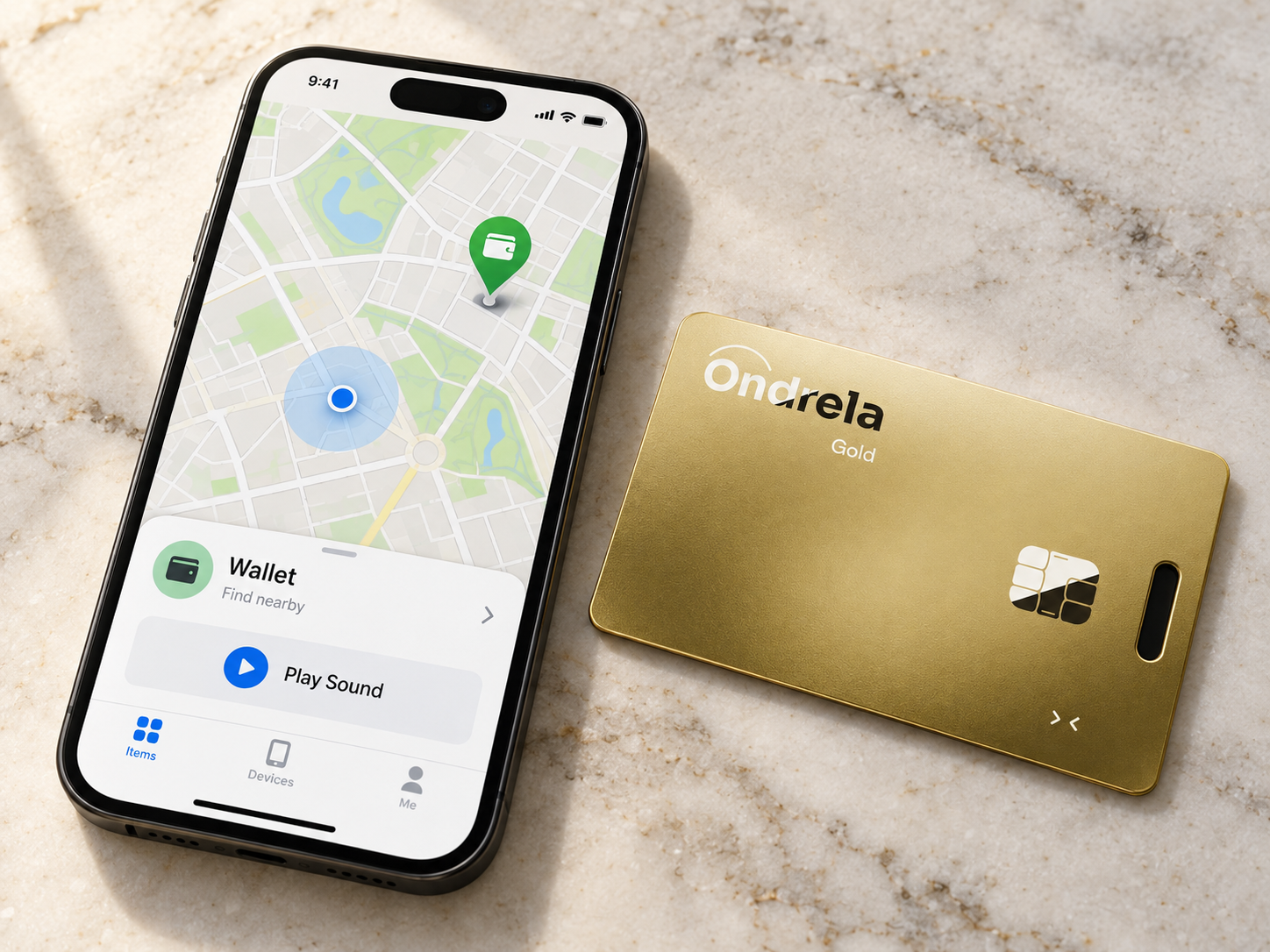
From then on, you can look your wallet up on a map, ring it when it’s hiding nearby, and get a nudge when you walk off without it. Same wallet, same pocket, one more card.
How it helps
Three ways to turn “Where is it?” into “There it is.”
Start with the map.
Open the finding app on your phone and see where the card last reported in. Instead of retracing every stop from memory, you start with a pin on a map.
Nearby, but hiding? Make it ring.
One tap and the card rings. Follow the sound to the sofa cushions, the other bag, the pile of laundry, or the jacket you already checked twice.
Get a heads-up when you leave it behind.
Switch on left-behind alerts in the app and your phone tells you when you walk away without your wallet, while going back for it is still a two-minute detour and not a lost afternoon.
Beyond your phone’s range
Your phone doesn’t have to be the one nearby.
Out of your phone’s range doesn’t mean out of reach. The finding network takes over, and this is how a location gets back to you.
Your card sends a signal.
The card broadcasts a low-energy Bluetooth signal from inside your wallet.
A nearby device picks it up.
A phone on the finding network comes within range, detects the card and relays an encrypted location report over its own connection.
Your app shows the location.
Open the app and see where your card was last reported.
You don’t have to ask anyone for help. Nearby devices pass the report along automatically, in the background.
It works with the phone you already have.
This is where trackers differ, and it’s easy to miss until after you’ve ordered. The best-known tracker on the market can only be set up from an iPhone. Carry an Android and it’s simply not an option. Ondrela works with both. You pair it with the finding app your phone already has: Find My on an iPhone, Find Hub on an Android.
At setup you choose the app that matches your phone, and that’s the network your card reports through. So in a household split between iPhone and Android, everyone can carry a card that works with the phone they already own.
Watch a wallet being found.
Built for the wallet you already carry
A tracker only helps if it stays with your wallet.
A tracker can be clever and still be annoying to carry. A thick fob pushes the card pocket out of shape, and within a month it’s living in a drawer instead of in your wallet, the one place it was supposed to be.
A bulky fob
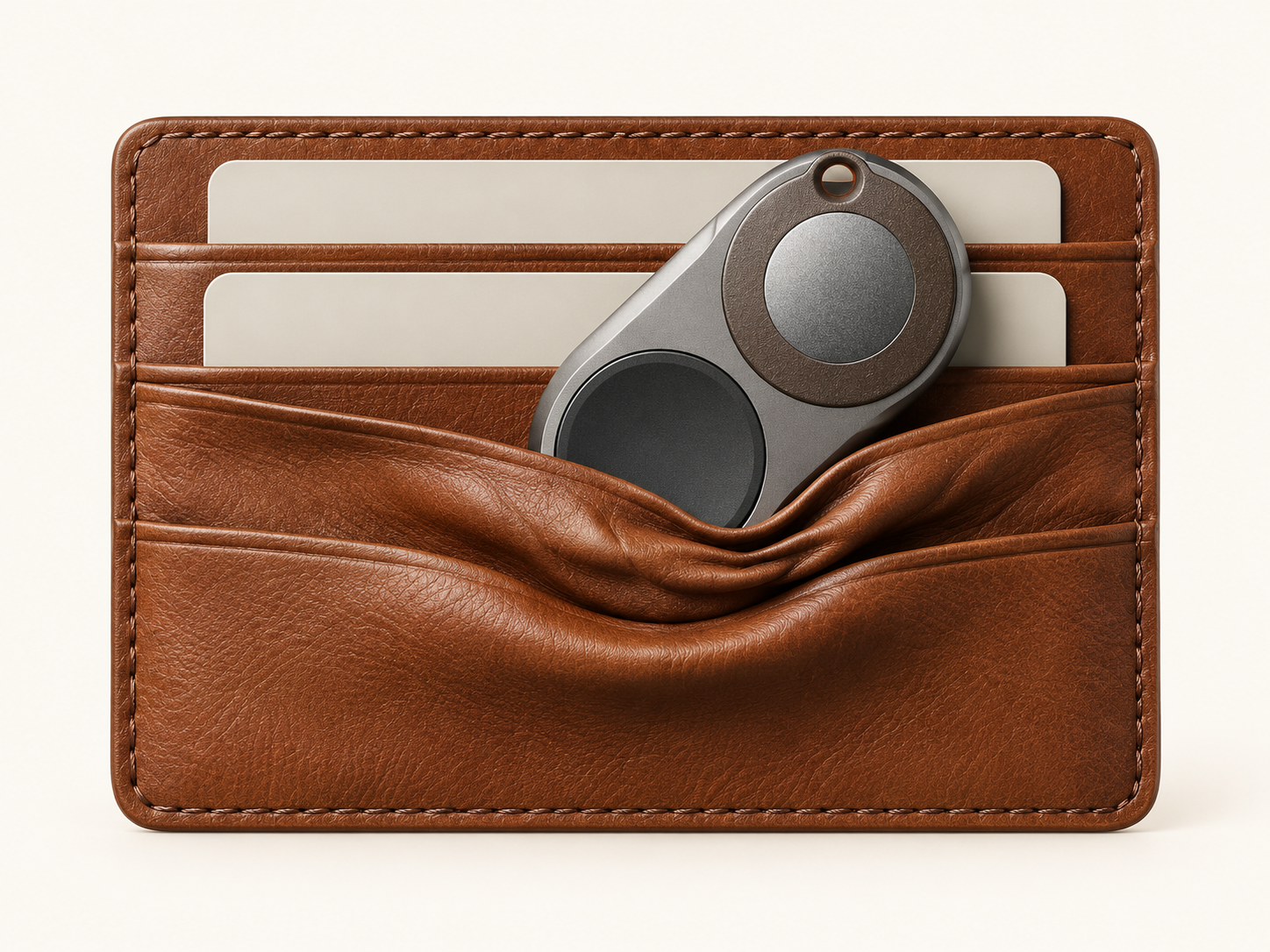
Ondrela Card
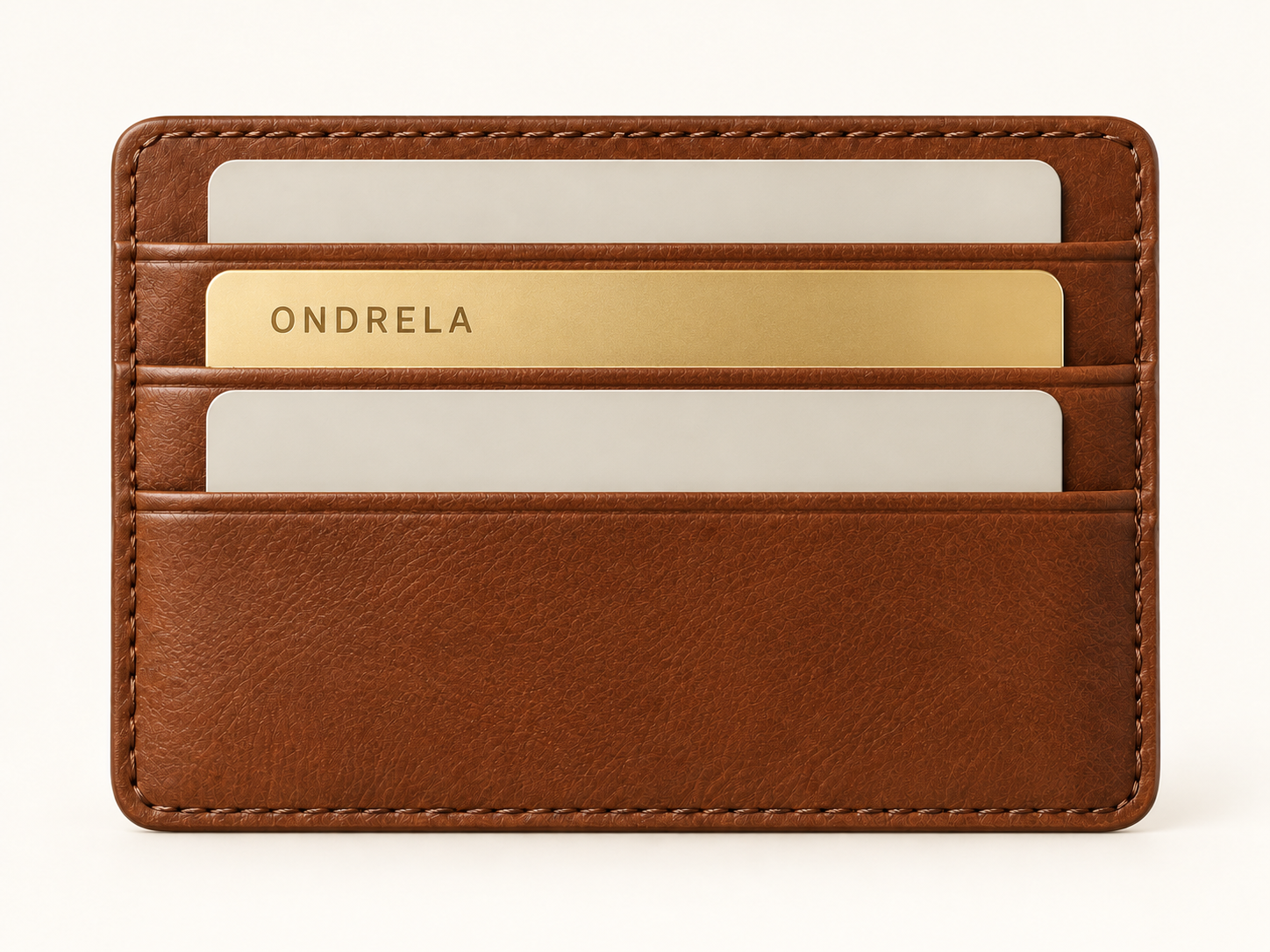
Ondrela is the same shape as everything else in your wallet. Slide it into a regular card slot and it stays there, because it never has to fight for space.
Thin usually means something was left out. Not here. The manufacturer’s cutaway shows a board, a chip and an antenna laid out flat between two outer panels, where a round fob stacks its battery and radio on top of each other.
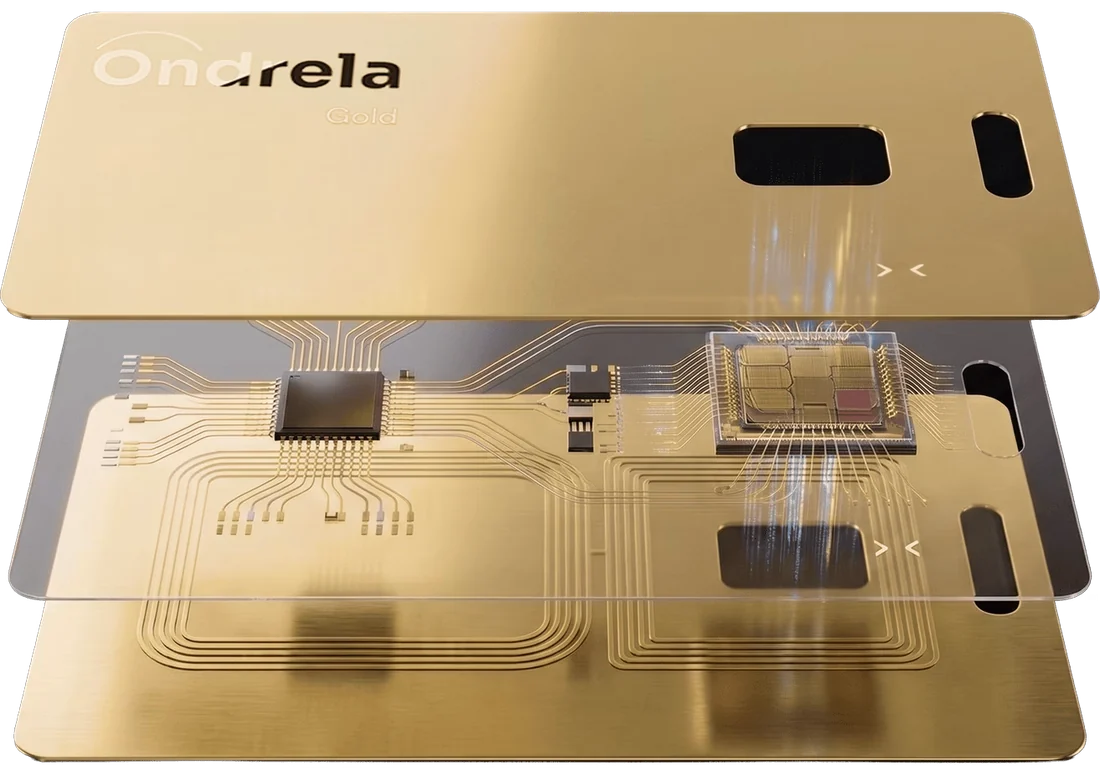
A card slot, not a key ring.
Flat and slim, so it fits wallets and passport holders. Nothing dangling, nothing round to find room for.
iPhone or Android.
Ondrela works with both. Pair it with the finding app your phone already uses.
Months between charges.
About six months on one charge. That’s a recharge twice a year, not one more battery to think about.
No monthly subscription.
Pay once for the card. The map, the ring and the alerts come with it, with no recurring fee.
Recharge. Slip it back in.
No cable. No battery to swap.
When it runs low, lay it on a wireless charging pad, then slip it back into your wallet. It’s water resistant too, for everyday spills and splashes.
The result is a wallet that looks and feels exactly the same, with one difference: now it can be found.
At home. Out for coffee. Far from home.
Pack one less worry for your next trip.
Airports, cafés, hotel desks, a taxi in a city you don’t know: travel is one long round of taking things out and putting them away again, usually in a hurry. A card in the pouch gives you something better than memory to go on.
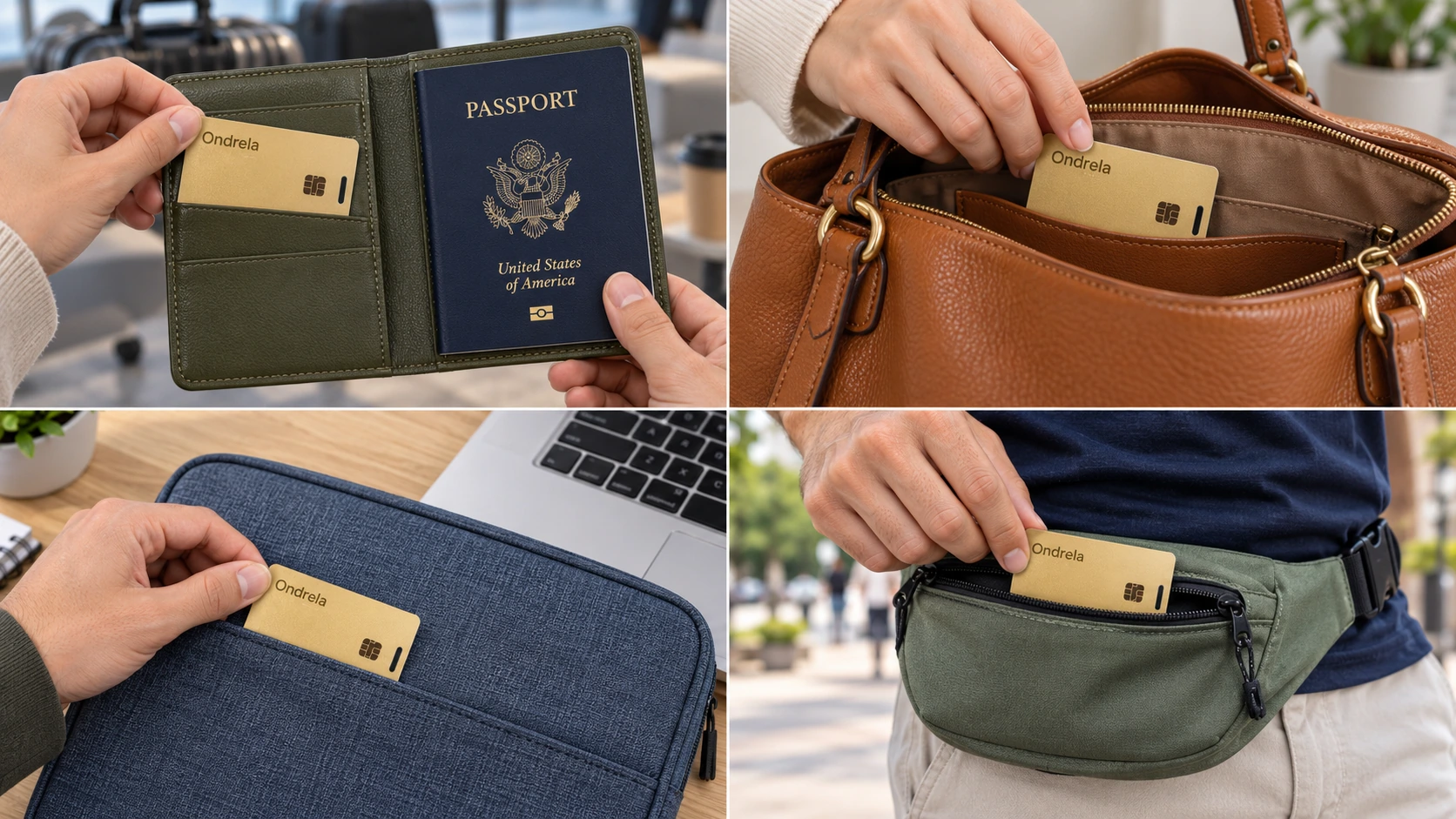
Check the map or make it ring, and skip the part where you turn every pocket inside out.
Keep a card with your travel documents and check that it’s connected before you leave.
A practical gift for anyone who’d like an easier way to find their own things. Pair it with their phone together and try it out once.
Want to find more than one thing? Give each its own card. That’s where a multi-card bundle makes more sense than moving one card from bag to bag.
Simple to set up
From the box to your wallet.
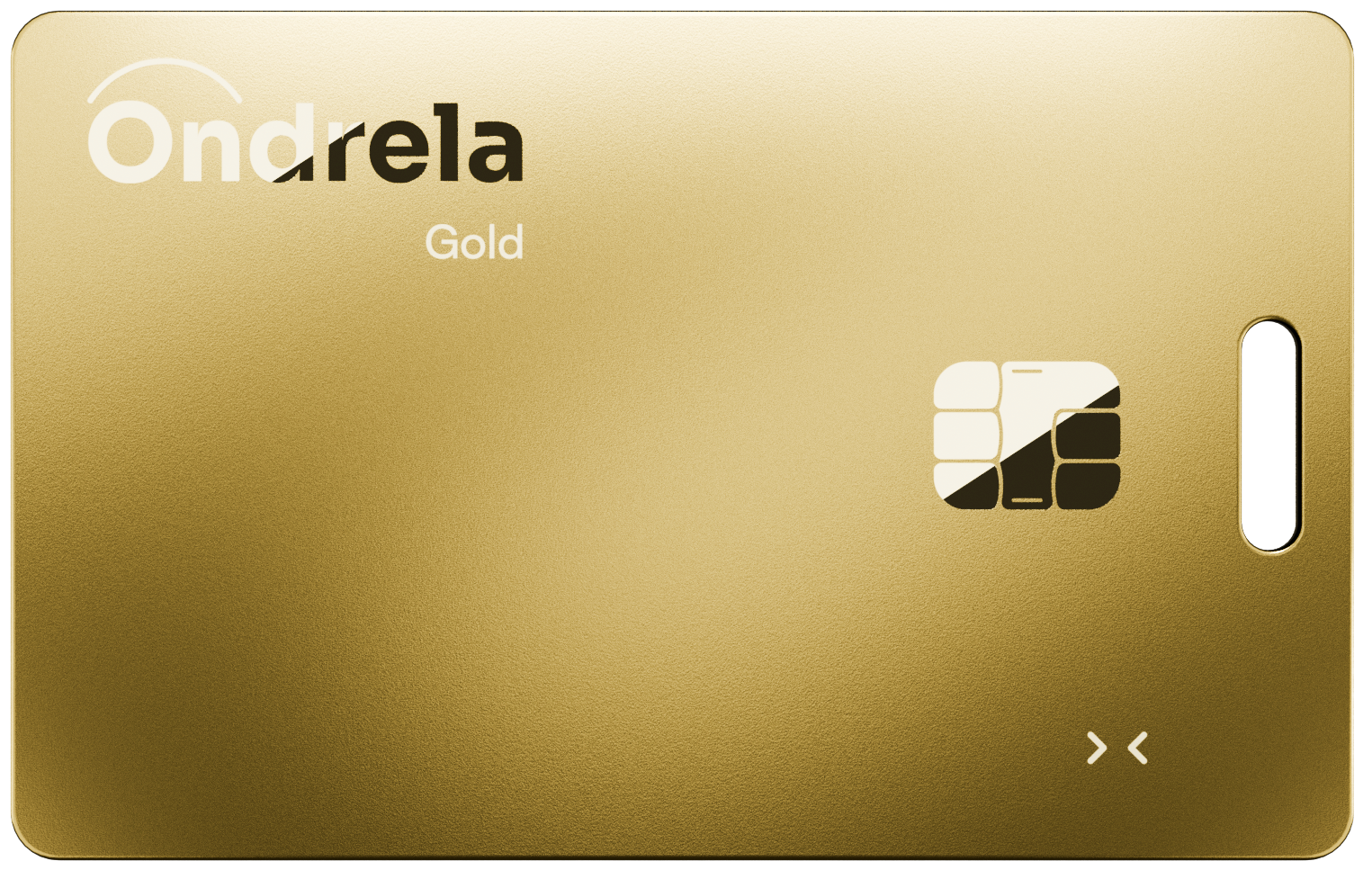
Here’s the card straight out of the box. After that it’s three small steps: pair it, try it, and give it a permanent place in your wallet.
Pair it once. Then it just lives in your wallet.
Pair with your phone.
Add the card to the finding app on your phone and give it a simple name, like “My wallet”.
Try the features at home.
Check the location, make it ring and switch on left-behind alerts. Do it once at home, so you already know how it works on the day you need it.
Slip it into a card slot.
That’s it. Glance at the battery level in the app now and then, and recharge the card when it runs low.
From Ondrela’s Trustpilot page
What buyers say about the card itself.
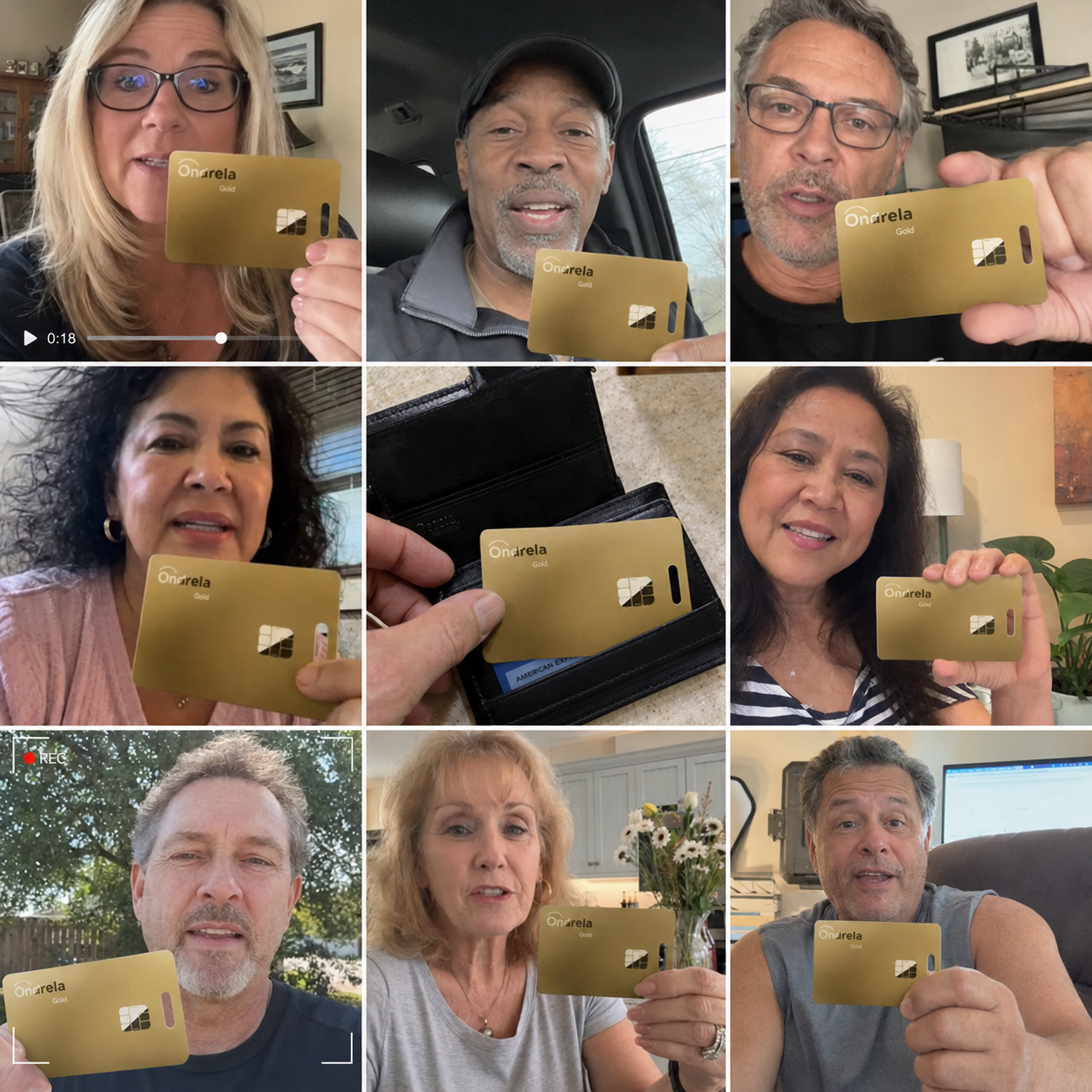
We picked six 5-star reviews that talk about the card itself: how it does its job, who it was bought for and what people ordered next.
★★★★★
“Outstanding cards that do an excellent job for those of us who lose things & can't find them.”
★★★★★
“Helpful to keep track of wallet. Now how about for the cat?”
★★★★★
“Fabulous love this card, I’ve even given one away as a gift”
★★★★★
“I have bought 3 cards; now I just ordered the wireless charger.”
★★★★★
“Great functional tech for any age”
★★★★★
“All as advertised. Fast delivery with updates! Item ordered exceeded expectations. Happy customer returning!”
Quotes appear as written on Trustpilot.
What does one lost wallet really cost?
The wallet is the cheapest part of losing your wallet.
Set the two side by side: one missing wallet, and one card that makes it findable.
| What matters | A missing wallet | An Ondrela card |
|---|---|---|
| Money | The cash, a new wallet, and the fees for a new ID and any cards that aren’t reissued free. | One purchase. No monthly fee. |
| Time | Half a day at least: searching, calling card issuers, waiting to replace documents, then watching your statements for two weeks. | One setup, then a recharge about twice a year. |
| Search | Retrace your steps and call every place you went. | Check the map, ring the card, and get an alert when you leave it behind. |
Put rough numbers on it. Say $85 to replace your ID, around $120 for a new wallet and the cards that aren’t reissued free, and $60 for the cash you happened to be carrying. That’s about $265 before you count a single hour of your own time, and none of it comes back.
On the other side: one card, bought once, with no monthly fee. That’s the real comparison. Not the card against the price of a wallet, but the card against everything a lost wallet sets in motion.
You’ve been able to ring a lost phone for years. Your wallet, the thing holding your cards, your ID and your cash, has stayed the one you search for by hand. This card closes that gap, and you only pay for it once.
Before you order
Quick answers to the usual questions.
Does it work with my phone?
Yes. Ondrela works with iPhone and Android. You pair the card with the finding app your phone already uses: Find My on an iPhone, Find Hub on an Android.
How does it know where my wallet is?
The card sends out a Bluetooth signal. Phones on the finding network pick it up as they pass and send an encrypted location report to your app, automatically and in the background.
Does the card need Wi-Fi?
No. The card uses Bluetooth, so there’s no Wi-Fi password to enter. Nearby devices on the finding network use their own connection to pass the location along.
Is there a subscription?
No. You pay once for the card, and the map, the ring and the alerts come with it. There’s no monthly fee.
How long does the battery last?
About six months per charge. When it runs low, lay the card on a wireless charging pad.
How do I set up left-behind alerts?
Turn on left-behind alerts in the finding app and allow notifications on your phone. Try it once at home when you set the card up.
Can it help if my wallet is stolen?
It gives you a lead you wouldn’t otherwise have: where the wallet last reported in, and a ring you can trigger if it turns out to be close by.
What if it’s not for me?
The seller has a 60-day return policy. To start a return, contact Ondrela support.